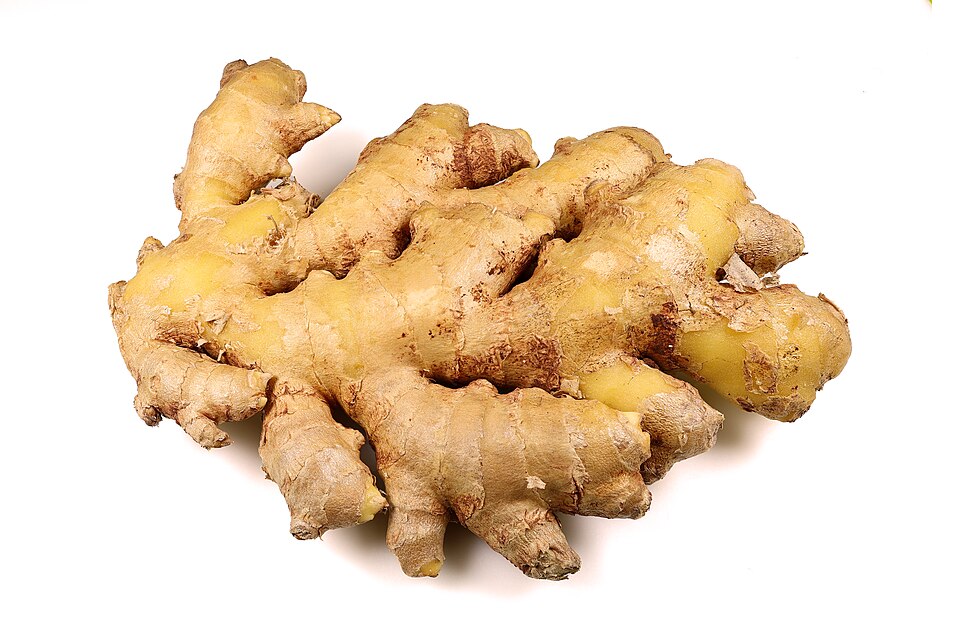
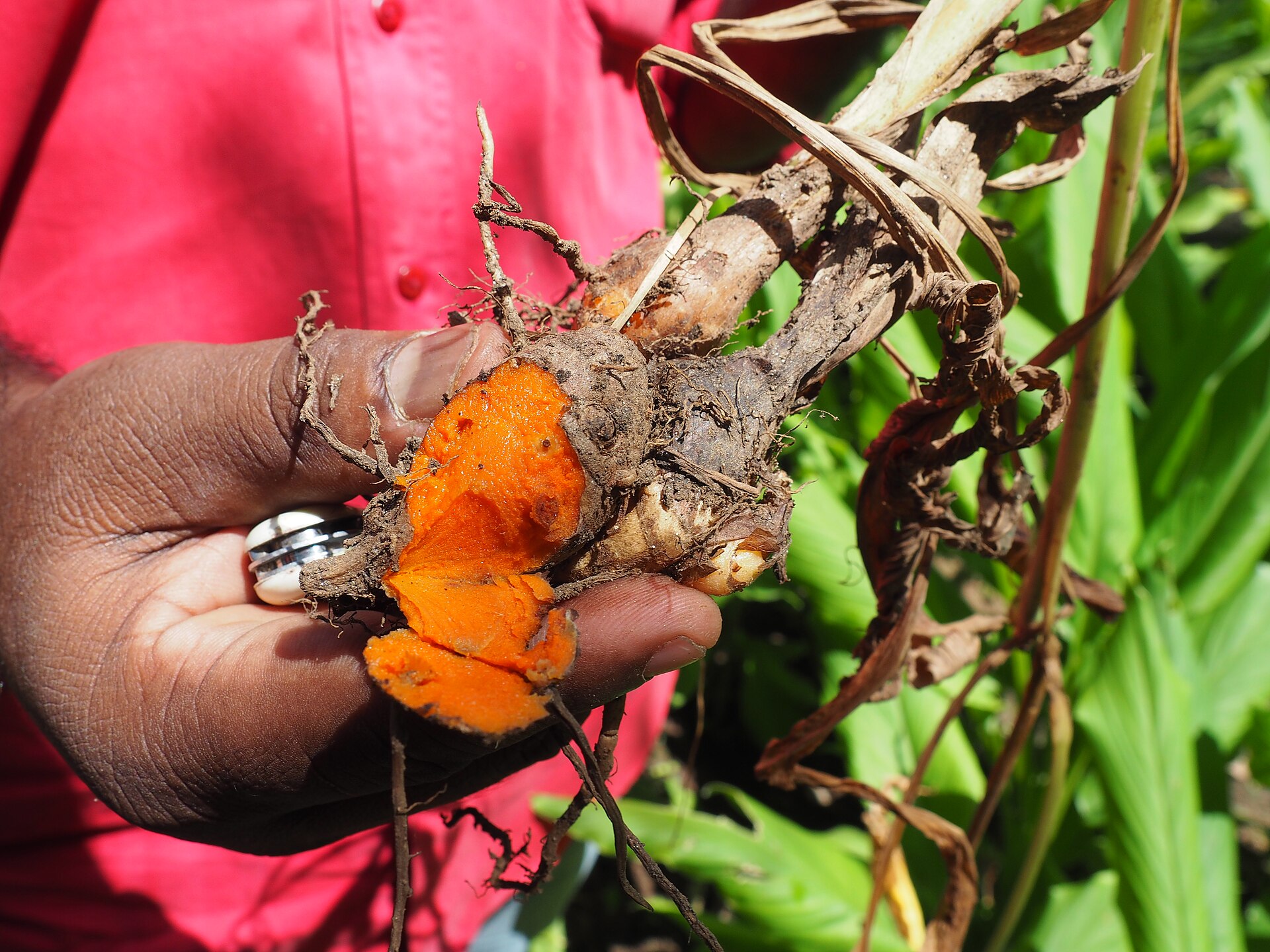
Turmeric is a leafy plant in the ginger family. Its rhizome (underground stem) is the source of the bright yellow-orange spice and the main ingredient in curry powder [1][3]. It's grown commercially in Southeast Asia and India [1].
Turmeric and curcumin supplements are promoted for many conditions, especially joint pain. We don't know enough to say whether they help with any health problem[1]. The most important safety issue is that some turmeric supplements have been linked to liver injury [1][4].
Quick facts
Specimen · Zingiberaceae
Botanical name
Curcuma longa L.
Family
Zingiberaceae (ginger family)
Other names
turmeric, turmeric root, Indian saffron, haldi, curcuma
❦
Names
Common names: turmeric, turmeric root, Indian saffron [1]. Drugs.com also lists haldi and curcuma [2].
Botanical name:Curcuma longa L., also known by the synonym Curcuma domestica[1].
Turmeric vs. curcumin: curcumin is a major component of turmeric that gives the spice its yellow color [1]. Many supplements contain concentrated curcumin rather than the whole spice, so research on one doesn't always apply to the other.
❦
Traditional uses
This section describes how people have used turmeric historically. It does not show that these uses work. See the next section for the evidence.
Traditional medicine: turmeric has been used in Chinese, Indian (Ayurvedic), Islamic, and Thai traditional medicine for indigestion, the common cold, skin infections, arthritis, abdominal pain, and liver disease [1].
European traditional use: EU regulators accept turmeric root as a traditional remedy for digestive complaints such as feelings of fullness, slow digestion, and gas [7].
Religious and cosmetic use: it has been used in some Indian religious ceremonies and in cosmetics [1].
Food and dye: turmeric is a spice with a warm, bitter taste, used in curry powders and some mustards, and as a yellow coloring in cheese, butter, and other foods [2]. Its dye is also used in fabrics and paints [3].
❦
What the evidence says
Bottom line: mixed and uncertain. Many studies exist, but products vary widely, which makes the evidence hard to compare [1].
Use
What was found
Strength
Knee osteoarthritis
Several meta-analyses have looked at turmeric or curcumin for knee pain and stiffness. NCCIH calls the early evidence positive but says higher-quality studies are needed [1]. A 2022 review of 15 trials (1,670 people) found curcuminoids worked better than placebo for pain and function in the short term, and weren't inferior to NSAID pain relievers, but the studies were low quality [8]. In one 4-week trial of 367 adults, a curcumin extract worked as well as ibuprofen [2].
Early research suggests it might improve some measures, but it's unclear which ones [1].
Limited
Mouth sores from cancer treatment
Early research suggests turmeric or curcumin taken by mouth or as a mouthwash might help [1].
Limited
Digestive discomfort
Accepted in the EU as a traditional use, based on long-standing use rather than clinical trials [7].
Traditional use only
Other conditions
Not enough evidence to conclude whether turmeric or curcumin helps [1].
Unknown
What we can't say: that turmeric or curcumin treats arthritis, liver disease, or any other condition. Curcumin products vary in how much curcumin they contain, and often include other substances such as piperine from black pepper to boost absorption [1].
❦
How it’s used / prepared
This is general, traditional information, not a recommendation or a dose for you. Talk with a health professional before using turmeric for a health purpose.
Part used: the rhizome, which is boiled, dried, peeled, and ground to make the spice [3].
In food: as a spice in curry powders and mustards [2]. Turmeric is "generally recognized as safe" (GRAS) as a food ingredient in the U.S. [6].
Tea and tinctures: the EU traditional-use monograph describes 0.5–1 g of cut root in 150 ml (about ⅔ cup) of boiling water, 2–3 times daily, for adults. It also covers powder, tinctures, and dry extracts, and advises seeing a doctor if symptoms last more than 2 weeks [7].
Supplements: many curcumin products are made to be absorbed better, for example by adding piperine [1]. Clinical trials have used a wide range of doses [2]. These "high-absorption" products are the ones NCCIH links to liver damage (see Safety).
On the skin: turmeric is also applied to the skin, for example as an ointment for knee pain [1].
❦
How to identify
Turmeric is almost always bought as dried powder or fresh root.
We did not find a reliable source describing a dangerous plant look-alike for turmeric. The bigger issue is product variation: curcumin supplements differ in how much curcumin they contain and often include other ingredients, such as piperine [1]. In one liver-injury case series, 3 of the 7 products tested also contained piperine [5]. In at least one other case of liver injury, product contamination or adulteration couldn't be ruled out [2].
❦
Safety and interactions
Generally: regular turmeric or curcumin (not modified for better absorption) is likely safe in recommended amounts for up to 2 to 3 months [1].
Side effects: nausea, vomiting, acid reflux, stomach upset, diarrhea, or constipation. Curcumin on the skin can cause hives or itching [1]. Rare contact dermatitis and anaphylaxis (a severe allergic reaction) have been reported [2].
Liver injury: some turmeric products have been linked to several dozen cases of acute liver injury [4]. NCCIH says liver damage has been reported with high-absorption curcumin products, and to stop and talk with your health care provider if you notice fatigue, nausea, poor appetite, dark urine, or yellowing of the skin or eyes (jaundice) [1]. A U.S. Drug-Induced Liver Injury Network study found 10 cases, all since 2011 and 6 of them since 2017. Five people were hospitalized and 1 died. The injury usually appeared 1 to 4 months after starting turmeric and was strongly linked to a gene variant (HLA-B*35:01) [5].
Bleeding and blood thinners: turmeric may increase the risk of bleeding in people taking warfarin and antiplatelet drugs [6]. Drugs.com also lists possible interactions with other anticoagulants, NSAIDs, salicylates such as aspirin, and clot-dissolving drugs [2]. In one case, a woman taking the blood thinner fluindione had a sudden rise in her INR (a clotting test) after taking turmeric, without bleeding [2].
Other medicines: turmeric may interact with drugs broken down by the liver enzymes CYP2D6 and CYP3A, and with cladribine. One liver-transplant patient who took large amounts of turmeric developed high levels of the anti-rejection drug tacrolimus and kidney injury [2]. EU regulators found no interactions reported [7]. Talk with your health care provider before using turmeric with any medicine [1].
Gallbladder and liver conditions: Drugs.com says turmeric shouldn't be used by people with gallstones or a blocked bile duct [2]. EU regulators don't recommend it with bile duct obstruction, bile duct inflammation, liver disease, gallstones, or other biliary diseases, because it may stimulate bile flow [7].
Kidney stones and iron: turmeric is relatively high in oxalate and increased oxalate in urine. This might raise kidney-stone risk in susceptible people, although kidney problems haven't been reported. A case of iron-deficiency anemia was likely caused by high-dose turmeric [2].
Pregnancy: turmeric supplements may be unsafe in pregnancy [1]. Drugs.com advises avoiding them because of documented menstruation-stimulating and abortion-causing effects [2]. EU regulators don't recommend it, because safety hasn't been established [7].
Breastfeeding: little is known about amounts greater than food amounts [1]. LactMed found no data on transfer into milk; a small study found no adverse effects in breastfed infants. Turmeric has been used to boost milk supply, but no data support this, and curcumin suppressed milk production in lab-grown cells [6]. Drugs.com advises avoiding it, and EU regulators don't recommend it, while breastfeeding [2][7].
Children: EU regulators don't recommend turmeric remedies under age 18 because of a lack of data [7].
Not medical advice
This page is for general education only. It is not medical advice and doesn't replace a doctor, pharmacist, or other qualified professional. Herbs can cause allergic reactions and interact with medicines. Check with a health professional before using any herb, especially if you are pregnant or breastfeeding, giving it to a child, taking medication, or managing a health condition. Never eat or use a wild plant unless an expert has confirmed what it is. For a suspected poisoning in the U.S., call Poison Help at 1-800-222-1222 [9]. In Canada, call 1-844-POISON-X (1-844-764-7669), or the Centre antipoison du Québec at 1-800-463-5060 if you are in Québec [10].
Halegoua-DeMarzio D, Navarro V, Ahmad J, et al. Liver injury associated with turmeric, a growing problem: ten cases from the Drug-Induced Liver Injury Network [DILIN]. Am J Med. 2023. https://pubmed.ncbi.nlm.nih.gov/36252717/
Feng J, Li Z, Tian L, et al. Efficacy and safety of curcuminoids alone in alleviating pain and dysfunction for knee osteoarthritis: a systematic review and meta-analysis of randomized controlled trials. BMC Complement Med Ther. 2022. https://pubmed.ncbi.nlm.nih.gov/36261810/