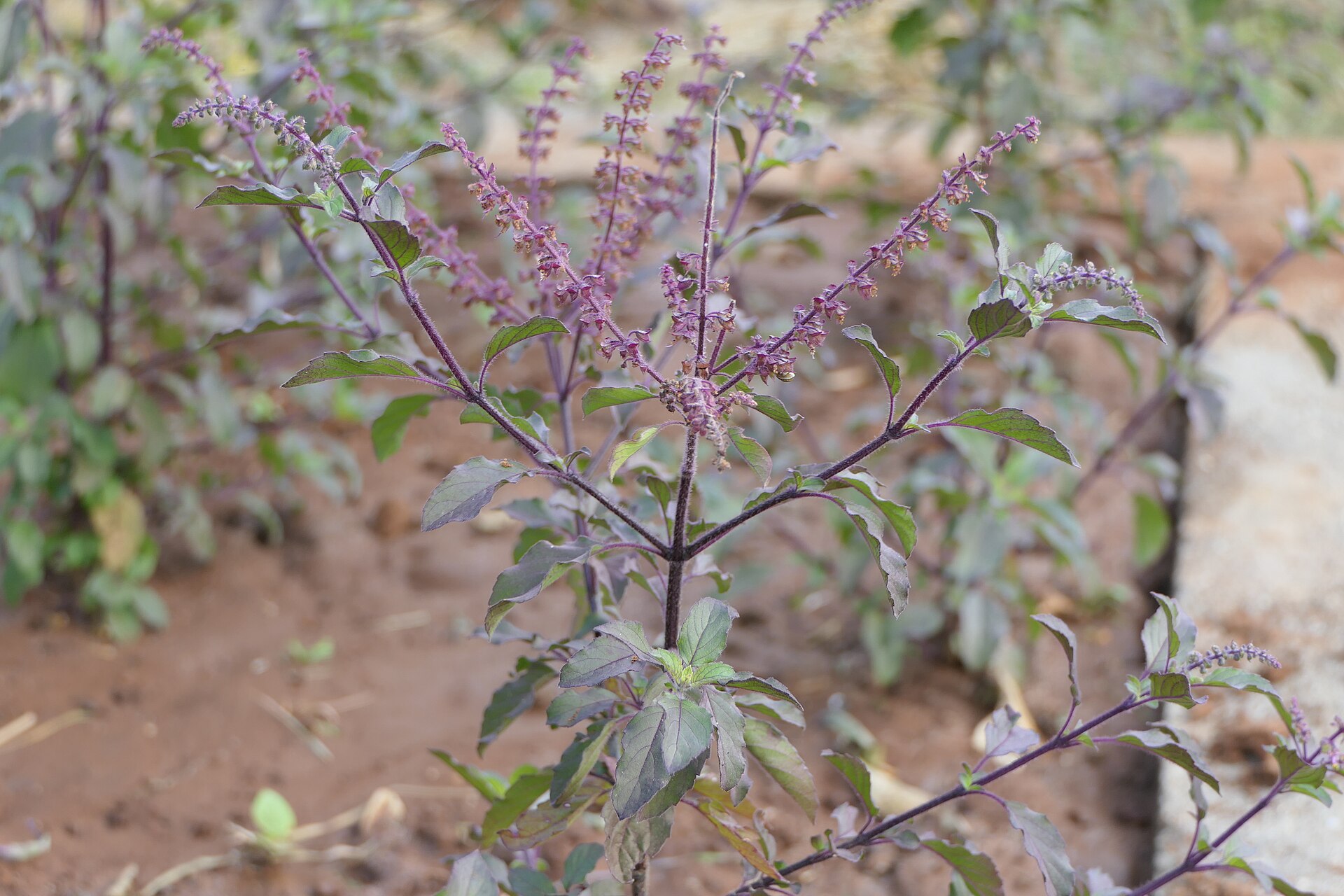
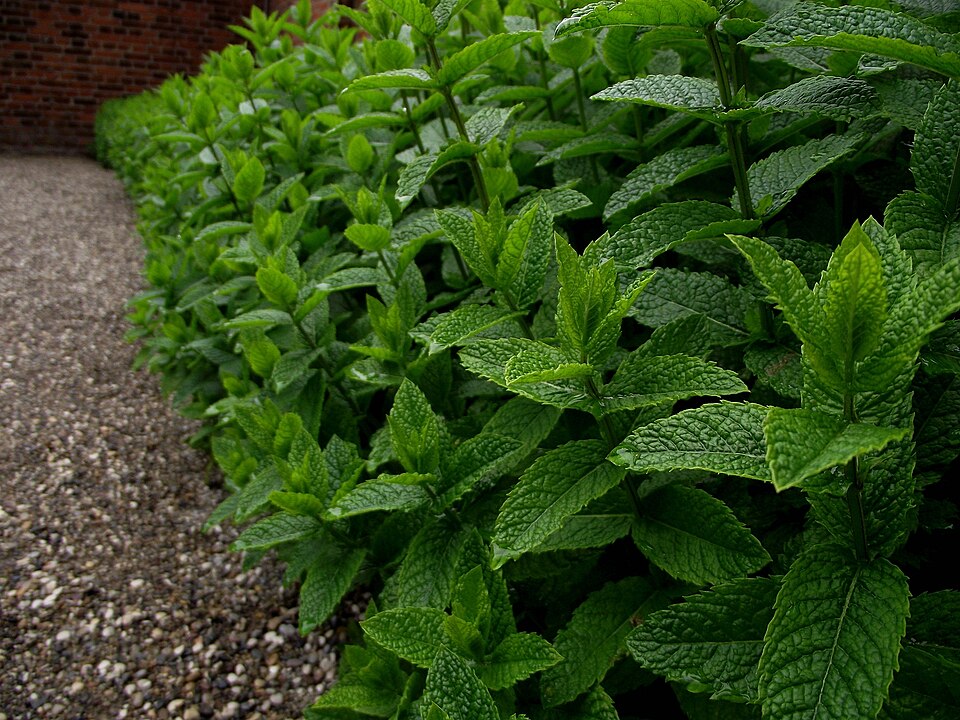
Holy basil is an aromatic annual, short-lived perennial, or small shrub in the mint family, native to tropical and subtropical southern Asia. It's a close relative of sweet basil, with leaves that often have a purple cast and a spicy taste of clove, mint, and basil [2]. It's sacred in Hinduism and important in Ayurvedic medicine [1][2], and it's also a cooking herb in Asia, more often cooked or made into tea than eaten raw [2].
Holy basil is often sold for stress. Human evidence is limited: reviews describe encouraging results from small studies, but well-designed clinical trials are lacking [1][4].
Not the same as sweet basil: the common kitchen basil is a different species, Ocimum basilicum[3]. NC State Extension lists Thai basil as a cultivar of sweet basil [3], although Drugs.com lists "Thai basil" among the names for holy basil [1]. Because names overlap, check the botanical name on any product.
❦
Traditional uses
This section describes how people have used holy basil historically. It does not show that these uses work. See the next section for the evidence.
Ayurveda: holy basil has long been used in Ayurvedic medicine, where it has been called an "elixir of life" [1]. NC State Extension notes its use in Hindu religion and Ayurvedic medicine to cleanse the body and for stomach and skin problems [2].
Many traditional uses: Drugs.com lists the common cold, headache, stomach complaints, inflammation, heart disease, insect or snake bites, and malaria [1].
Religious use: it is an important symbol in Hindu religious tradition [1].
Food and drink: the leaves are used in cooking and in tea [1][2].
❦
What the evidence says
Bottom line: limited. Studies in people are few and mostly small [1][4].
Use
What was found
Strength
Overall
A 2017 systematic review found 24 human studies on metabolic disorders, cardiovascular disease, immunity, and brain function. All reported favorable results, with no significant side effects, but the authors said more studies are needed to confirm the best dose and form [4].
Limited
Stress and anxiety
Limited clinical studies suggest it improves symptoms of stress disorders compared with placebo. In one study of healthy volunteers, a leaf extract taken for 30 days improved test reaction times and anxiety scores. Clinical trials are lacking to recommend it for any use [1].
Limited
Blood sugar
A 2004 review found only 1 small, poor-quality trial [1].
Very limited
Gum health (mouthwash)
A small trial of a holy basil mouthwash reported less bleeding of the gums [1].
Very limited
What we can't say: that holy basil treats stress, anxiety, diabetes, or any other condition. We didn't find an NCCIH fact sheet on holy basil.
❦
How it’s used / prepared
This is general, traditional information, not a recommendation or a dose for you. Talk with a health professional before using holy basil for a health purpose.
Cooking: used like sweet basil in Asian cooking, though more often cooked than raw [2].
Powder and extracts: it is also taken as a dried powder or mixed with ghee [1], and studies have used extracts at varying doses [1][4]. There's no well-established dose[4].
Mouthwash: studied in a small trial for gum health [1].
❦
How to identify
Growth: an upright, many-stemmed plant up to about 3 feet tall, grown as an annual or short-lived perennial [2].
Stems: square and very hairy, purple or green [2].
Leaves: pungently fragrant, hairy, elliptic to oblong, 1.5–3 inches long, with toothed or smooth edges and often a purple cast [2]. They have a strong aroma likened to cloves [1].
Flowers: tiny white, pale pink, or lavender tubular flowers in clusters 4–12 cm (about 1.5–5 inches) long at the stem tips [2].
We did not find a reliable source describing a dangerous look-alike for holy basil. The main mix-up is with sweet basil (Ocimum basilicum), which NC State Extension lists as often confused with it [2]. Both are edible herbs, but research on one doesn't apply to the other. See the comparison table above.
❦
Safety and interactions
Side effects: few side effects have been reported in clinical studies [1][4].
Medicines: possible interactions are known only from animal studies. In rats, holy basil increased the effect of barbiturate sleeping pills and affected the antiseizure drug levetiracetam. Drugs.com suggests caution with acetaminophen, because a holy basil compound damaged the liver in mice [1]. We found no reports of these interactions in people.
Fertility: high doses reduced sperm counts in male rodents, and this was reversible [1].
Pregnancy: Drugs.com advises avoiding it. Safety data are lacking, animal data on harm to the embryo conflict, and menstruation-stimulating and abortion-causing effects have been reported for related sweet basil [1].
Breastfeeding: holy basil has been used traditionally to increase milk supply, but safety data are lacking, and Drugs.com advises avoiding it [1]. We didn't find a LactMed entry for holy basil. LactMed's entry for sweet basil says it appears to be safe in the amounts found in food, but many sources recommend against medicinal doses while nursing because of its estragole content and lack of safety information [6]. That entry is about a different species.
Children:we found no specific data on use in children.
Not medical advice
This page is for general education only. It is not medical advice and doesn't replace a doctor, pharmacist, or other qualified professional. Herbs can cause allergic reactions and interact with medicines. Check with a health professional before using any herb, especially if you are pregnant or breastfeeding, giving it to a child, taking medication, or managing a health condition. Never eat or use a wild plant unless an expert has confirmed what it is. For a suspected poisoning in the U.S., call Poison Help at 1-800-222-1222 [5]. In Canada, call 1-844-POISON-X (1-844-764-7669), or the Centre antipoison du Québec at 1-800-463-5060 if you are in Québec [7].
Jamshidi N, Cohen MM. The clinical efficacy and safety of tulsi in humans: a systematic review of the literature. Evid Based Complement Alternat Med. 2017. https://pubmed.ncbi.nlm.nih.gov/28400848/
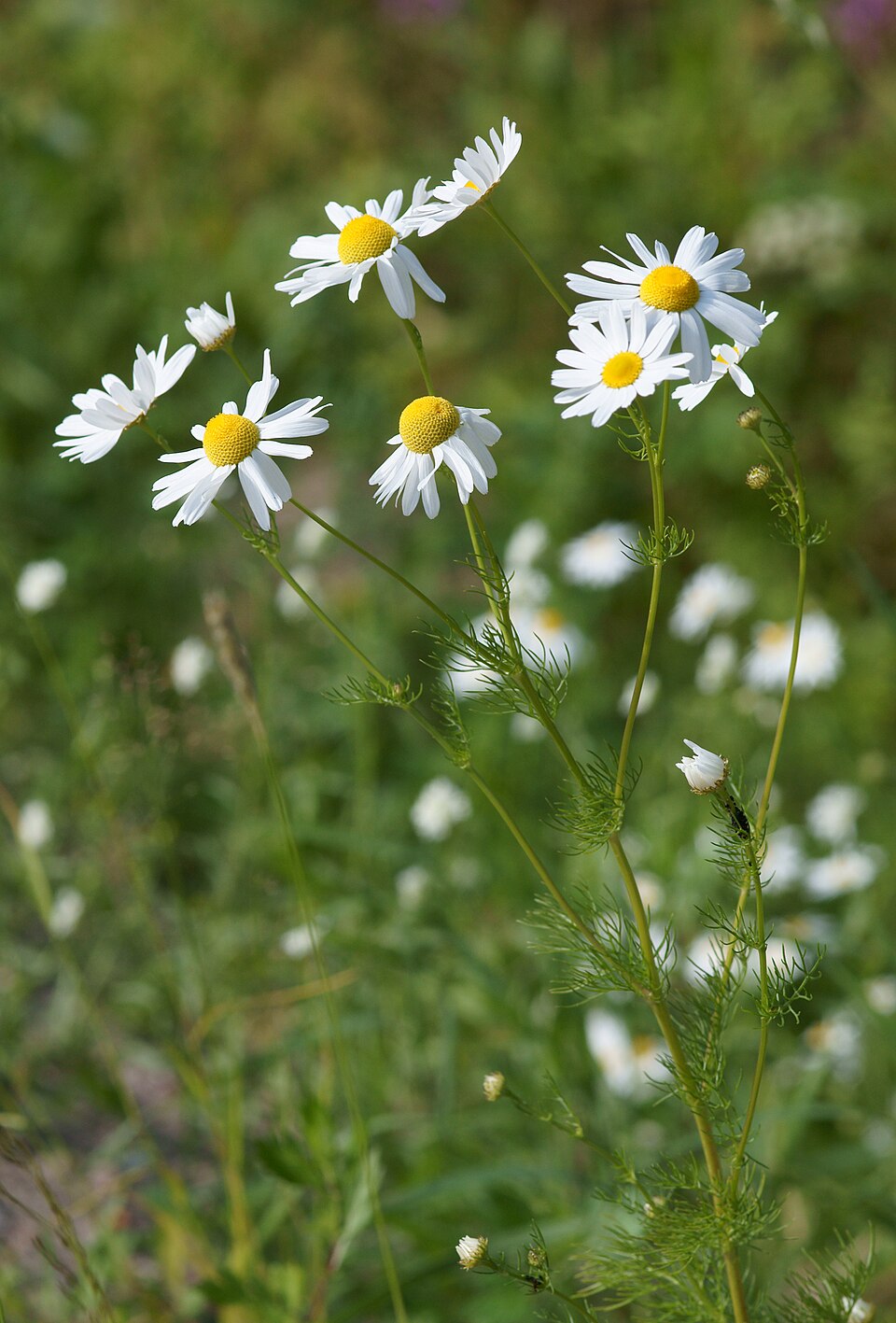
German chamomile is a small, sweet-smelling annual with feathery leaves and little daisy-like flowers that have white petals and a domed yellow center.