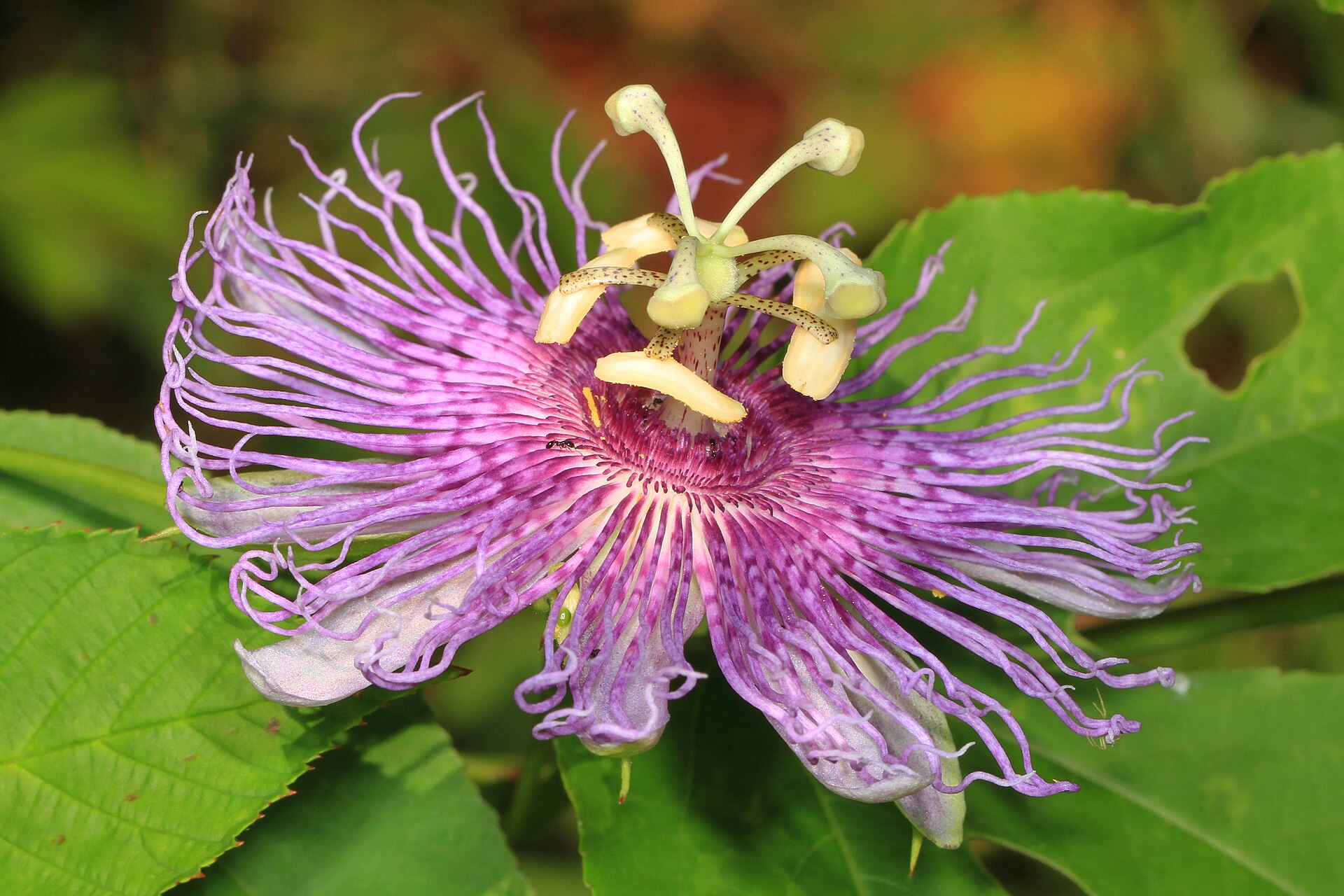
Passionflower is a fast-growing climbing vine with white and purple flowers [1][2]. It's native to the southeastern and south-central United States [2], and NCCIH notes that it's also native to Central and South America [1]. Its egg-shaped fruits, called maypops, can be eaten when ripe [2].
Today passionflower is promoted mainly for anxiety and sleep problems. The evidence is limited. A small amount of research suggests it might help with anxiety, including anxiety before surgery or dental work, and might improve total sleep time, but conclusions are not definite [1].
Family: Passifloraceae, the passion vine family [2].
Not the same as passion fruit: "passion flower" can refer to many of the roughly 400 Passiflora species [3]. Drugs.com refers to Passiflora edulis as purple passion fruit, and research on passion fruit peel used that species [3]. This profile is about P. incarnata. Information about one Passiflora species can't be applied to another [3].
About the name: Spanish explorers saw the flower's parts as symbols of the Passion of Christ, which gave the plant its common and scientific names [3].
❦
Traditional uses
This section describes how people have used passionflower historically. It does not show that these uses work. See the next section for the evidence.
Native American uses: Native Americans poulticed the root for boils, cuts, bruises, earaches, and inflammation, and made it into teas to soothe nerves [2].
A sedative in Europe: Spanish explorers learned of passionflower in South America in the 16th century. It was brought to Europe, widely cultivated, and became part of European folk medicine as a sedative [1].
European traditional use: EU regulators accept passionflower herb as a traditional remedy for mild symptoms of mental stress and to aid sleep [4].
Other uses: in Europe it has also been used in homeopathic medicine for pain, insomnia, and nervous exhaustion [3].
Food: ripe maypops can be eaten fresh off the vine or made into jelly [2].
❦
What the evidence says
Bottom line: limited. Passionflower hasn't been studied extensively, and there are few quality clinical trials [1][3].
Use
What was found
Strength
Anxiety
A 2020 systematic review of 9 clinical trials in adults found that most reported less anxiety with P. incarnata preparations. The effect was less clear in people with mild anxiety. The trials lasted from 1 to 30 days and used many different measures [5].
Limited
Anxiety before surgery or dental work
A small amount of research suggests it might help, but conclusions are not definite [1].
Limited
Sleep
A small amount of research suggests it might improve total sleep time in adults with insomnia. Effects on falling asleep and staying asleep are mixed [1].
What we can't say: that passionflower treats anxiety, insomnia, or any other condition. There are too few quality trials to recommend it for any use [3].
❦
How it’s used / prepared
This is general, traditional information, not a recommendation or a dose for you. Talk with a health professional before using passionflower for a health purpose.
Parts used: the herb (Passiflorae herba), cut or powdered, according to EU regulators [4].
Tea (infusion): the EU traditional-use monograph describes 1–2 g of cut, dried herb in 150 ml (about ⅔ cup) of boiling water, for adolescents and adults [4].
Extracts: the monograph also covers powdered herb and liquid and dry extracts [4]. Liquid extracts may contain alcohol [4].
As food: passionflower is likely safe as a flavoring in food [1].
How long: NCCIH says passionflower tea may be safe for up to 7 nights, and a daily extract may be safe for up to 8 weeks [1]. The EU monograph says to see a doctor if symptoms last longer than 2 weeks [4].
❦
How to identify
Growth: a fast-growing, trailing or climbing vine that holds on with tendrils. It is woody in warm climates but dies back to the ground in cold winters [2].
Leaves: three-lobed, toothed, dark green above and lighter below, with a pair of prominent glands on the leaf stalk [2].
Flowers: fragrant, with 10 white petals and sepals and a fringed crown of pinkish-purple filaments, blooming from May to July [2].
Fruit: fleshy, leathery, egg-shaped "maypops" from July to October. They turn yellowish when ripe and "pop" when crushed [2].
❦
Look-alikes to avoid
When in doubt, don't.
If you're not sure which passionflower you have, don't eat it or use it.
We did not find a reliable source describing a deadly look-alike for passionflower. The main problem is telling Passiflora species apart, because their chemistry differs and information about one can't be applied to another [3].
Blue passionflower (Passiflora caerulea): a different species
NC State Extension lists it as a plant often confused with P. incarnata[2].
Drugs.com notes that several Passiflora species contain cyanide-producing compounds [3].
Passion fruit (Passiflora edulis): a different species
Drugs.com refers to it as purple passion fruit [3]. Studies of passion fruit peel don't tell us about P. incarnata, the species used as an herbal medicine [3].
❦
Safety and interactions
Possibly safe short term: NCCIH says passionflower may be safe as a tea for up to 7 nights, and as a daily extract for up to 8 weeks. Whether it's safe on the skin is not known [1].
Side effects: drowsiness, dizziness, and confusion [1]. Drugs.com also lists nausea, vomiting, unsteadiness, allergic reactions, occupational asthma, and runny nose [3].
Heart rhythm: prolongation of the QT interval and episodes of ventricular tachycardia (a fast heart rhythm) have been reported. Drugs.com advises generally avoiding passionflower if you have heart rhythm problems, and using caution with other drugs that prolong the QT interval [3].
Surgery and anesthesia: passionflower might slow down the nervous system too much when combined with anesthesia or other medicines used before and after surgery. Talk to your health care provider if you take it within 2 weeks of a scheduled surgery [1].
Medicines that act on the brain: Drugs.com advises caution with these, including benzodiazepines [3]. EU regulators found no interactions reported [4]. Drugs.com also notes a theoretical risk of bleeding with blood thinners, based on lab findings for passion fruit (P. edulis), not case reports [3].
Drowsiness and driving: EU regulators say it may impair your ability to drive or use machines [4].
Leaves and wild plants: NC State Extension rates passionflower as having medium-severity poison characteristics from cyanide-producing compounds, with symptoms such as severe nausea, vomiting, drowsiness, and episodes of irregular heartbeat, and says eating the leaves as herbal medicine is not recommended [2]. This differs from EU regulators, who accept the herb for traditional use [4]. We report both views.
Pregnancy: NCCIH says passionflower should not be used in pregnancy because it may cause contractions of the uterus and possibly other problems [1]. Drugs.com lists it as contraindicated in pregnancy, based on the uterus-stimulating action of some of its compounds in animal and lab studies [3].
Breastfeeding: little is known about safety [1]. EU regulators don't recommend it because there isn't enough data [4]. We didn't find a LactMed entry for passionflower.
Children: EU regulators don't recommend it under age 12 because of a lack of data [4].
Not medical advice
This page is for general education only. It is not medical advice and doesn't replace a doctor, pharmacist, or other qualified professional. Herbs can cause allergic reactions and interact with medicines. Check with a health professional before using any herb, especially if you are pregnant or breastfeeding, giving it to a child, taking medication, or managing a health condition. Never eat or use a wild plant unless an expert has confirmed what it is. For a suspected poisoning in the U.S., call Poison Help at 1-800-222-1222 [6]. In Canada, call 1-844-POISON-X (1-844-764-7669), or the Centre antipoison du Québec at 1-800-463-5060 if you are in Québec [7].
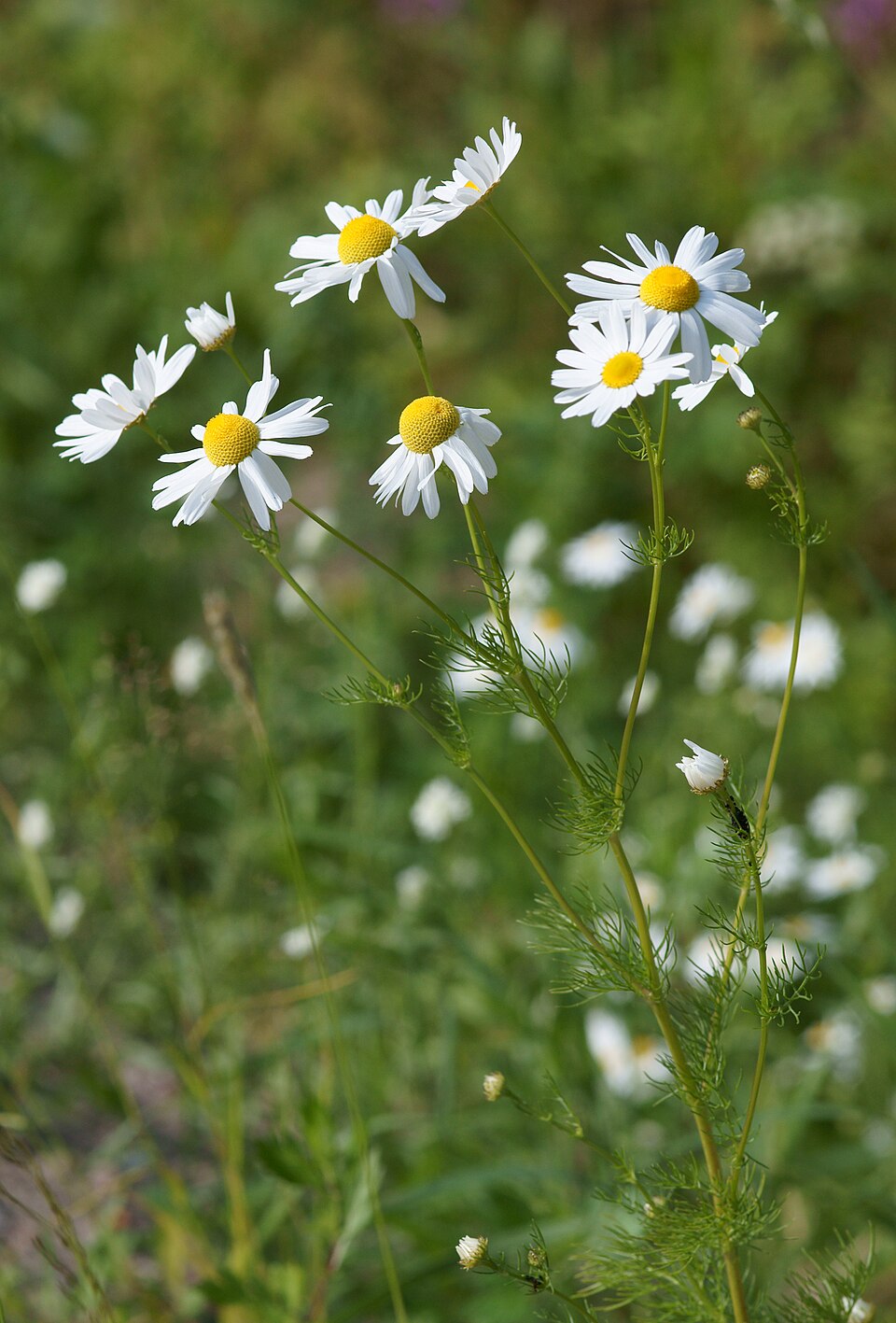
German chamomile is a small, sweet-smelling annual with feathery leaves and little daisy-like flowers that have white petals and a domed yellow center.