Cinnamon is the dried inner bark of tropical evergreen trees. Ceylon cinnamon comes from a tree native to Sri Lanka, while cassia comes from Southeast Asia [1][3]. The Ceylon cinnamon tree can grow 30–50 feet tall and does not survive cold winters, so in North America cinnamon is a store spice, not a garden or wild plant [3].
Cinnamon is a common kitchen spice, and supplements are promoted for diabetes and weight loss [1]. Research doesn't clearly support cinnamon for any health condition. A Cochrane review found no clear benefit for blood sugar control in diabetes [1][5]. European regulators accept Ceylon cinnamon bark only as a traditional remedy for mild digestive complaints [6].
The most important safety point is the difference between the two types. Cassia can contain enough coumarin to be a concern for the liver when eaten in large amounts over a long time. Ceylon cinnamon has only low levels [1][4].
Quick facts
Specimen · Lauraceae
Botanical name
Cinnamomum verum J.S. Presl (Ceylon) and Cinnamomum cassia Blume (cassia)
Family
Lauraceae (laurel family)
Other names
Ceylon cinnamon, true cinnamon, cassia, Chinese cinnamon, Saigon cinnamon
❦
Names
Common names: cinnamon; Ceylon cinnamon or "true" cinnamon; cassia, Chinese cinnamon, or Chinese cassia; Saigon cinnamon [1][2]
Botanical names:Cinnamomum verum J.S. Presl (synonym C. zeylanicum) is Ceylon cinnamon. Cinnamomum cassia (also called C. aromaticum) is cassia [1][2].
Watch the label: "cinnamon" on a spice jar can mean either type. Cassia is the most common type sold in North America [1]. The difference matters because cassia can contain much more coumarin [1][4]. See How it's used / prepared.
Where the name comes from:Cinnamomum comes from the Greek word kinnamomon, meaning spice, and verum means "true" [3].
❦
Traditional uses
This section describes how people have used cinnamon historically. It does not show that these uses work. See the next section for the evidence.
Spice and flavoring: cinnamon has been traded since ancient times. Records from around 2000 BC describe it being imported from China to Egypt [2].
Many traditional systems: the bark and other parts of the tree have long been used in traditional medicine and cooking in China, India, and Persia (Iran). Cinnamon was thought to help with inflammation, nerve pain, heart disease, cough, and other conditions [1].
Digestion: historically used for stomach upset [2]. The EU's traditional-use monograph lists mild, spasm-like digestive complaints, including bloating and gas, and mild diarrhea [6].
Menstrual cramps and circulation: traditional uses have included painful periods and circulation problems [2].
Breastfeeding: cinnamon has been used in Ayurvedic, traditional Chinese, and folk medicine to increase milk supply. No studies have tested this [7].
❦
What the evidence says
Bottom line: research doesn't clearly support cinnamon for any health condition [1]. Most studies were small and used different types and amounts of cinnamon, which makes the results hard to compare [2].
Use
What was found
Strength
Blood sugar in diabetes
A 2012 Cochrane review of 10 trials (577 people) found no significant difference in HbA1c (long-term blood sugar), insulin, or after-meal blood sugar, and an inconclusive effect on fasting blood sugar. Most trials had a high or unclear risk of bias [5]. NCCIH calls the evidence unclear [1].
Some meta-analyses, mostly of people with diabetes, found small improvements. The results varied widely between studies [2].
Weak.
Hay fever
A nasal spray with Ceylon cinnamon extract might improve symptoms, but this is preliminary [1].
Very preliminary.
What we can't say: cinnamon is not a replacement for diabetes treatment. The American Diabetes Association generally recommends against herb and spice supplements, including cinnamon, for blood sugar control because there is no clear evidence they help [2]. Study results from one product or type of cinnamon may not apply to others [7].
❦
How it’s used / prepared
This is general, traditional information, not a recommendation or a dose for you. Talk with a health professional before using cinnamon for a health purpose.
Parts used: the dried inner bark, sold as sticks (quills) or ground powder [2].
As food: cinnamon is likely safe in the amounts normally used in food [1]. The U.S. FDA lists Ceylon, Chinese, and Saigon cinnamon as "generally recognized as safe" spices [8].
Ceylon or cassia? Ceylon cinnamon has low coumarin levels that Germany's Federal Institute for Risk Assessment (BfR) considers safe. Cassia has more, so the BfR advises against eating large amounts of it over long periods [4]. Coumarin levels in cassia vary widely, even between samples from the same tree [9].
How much cassia is a lot? The BfR says a 60 kg (132 lb) adult reaches the tolerable daily intake of coumarin with about 2 g of cassia cinnamon a day. For a 15 kg (33 lb) child it is about 0.5 g [4]. Going a little over for a week or two is not considered risky [4]. If you use a lot of cinnamon every day, the BfR suggests choosing Ceylon cinnamon [4].
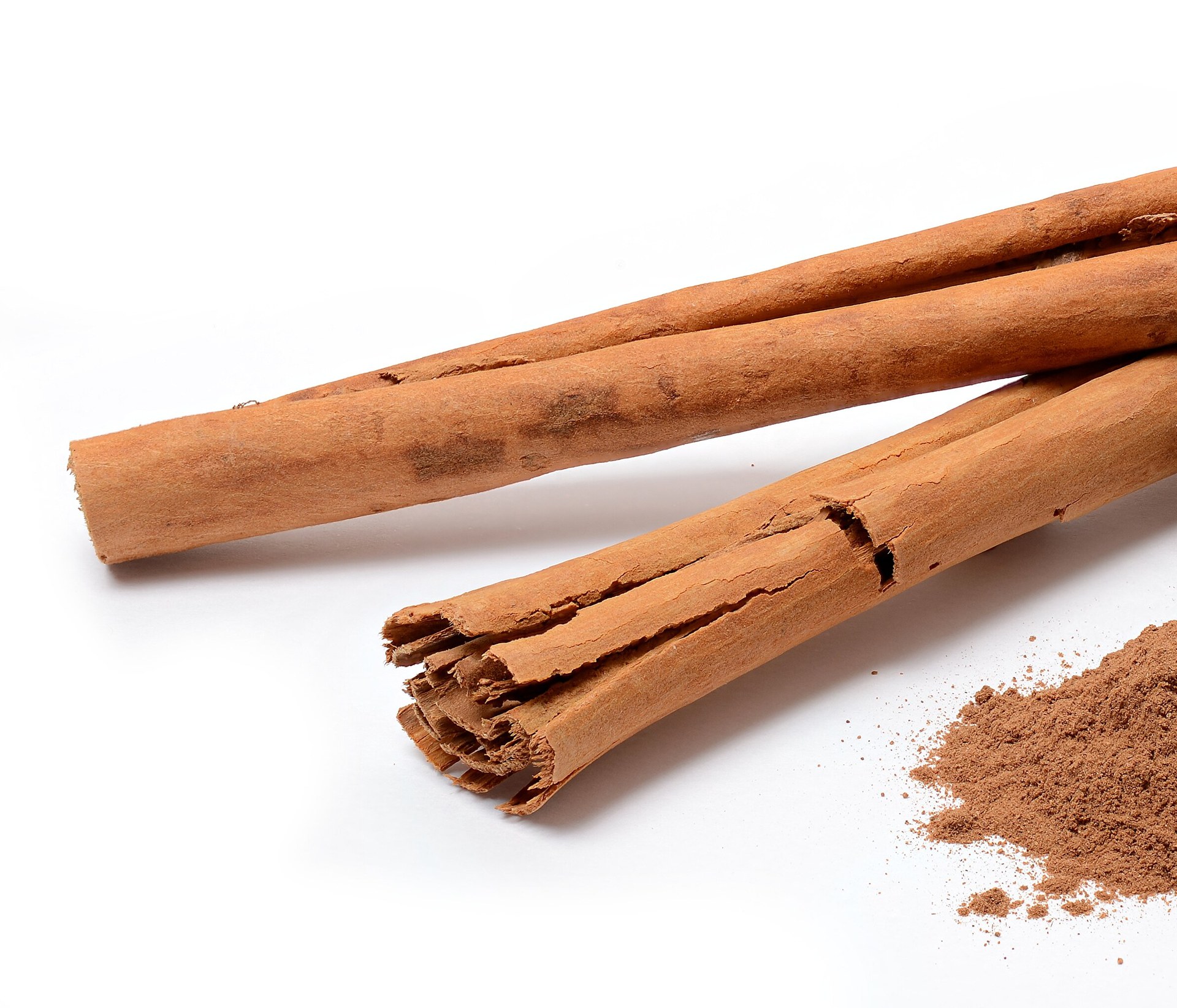
Telling them apart: ground cinnamon is hard to tell apart, so look for "Ceylon cinnamon" on the label. With sticks, cassia is one thick layer of bark rolled into a quill. A Ceylon stick has many thin layers rolled together, like a cut cigar [4].
Tea (infusion): the EU traditional-use monograph describes 0.5–1 g of cut Ceylon cinnamon bark as an infusion, up to 4 times a day, for adults [6].
Tincture and liquid extract: also described in the monograph for adults [6]. Tinctures contain alcohol [6].
Supplements: the BfR warns that cinnamon supplements may contain high levels of coumarin, depending on the type of cinnamon and how it was processed [4]. Studies have used 1–6 g of ground cinnamon a day [2].
When to stop and get help: in the EU guidance, see a doctor if digestive symptoms last more than 2 weeks, or diarrhea lasts more than 2 days [6].
❦
How to identify
Cinnamon is a store spice in North America, so you won't be foraging it. The useful skill is telling Ceylon from cassia.
The tree: Ceylon cinnamon is a tropical evergreen tree with large leaves (up to about 10 inches) that have 3 distinct veins. Young leaves can be reddish [3].
Bark: fragrant. The spice is the brown bark, which forms quills with lengthwise stripes [2][3].
Ceylon sticks: many fine, thin layers rolled together, giving a densely packed cross-section like a cigar [4].
Cassia sticks: a relatively thick single layer of bark that forms a small roll [4].
Powder: you can't reliably tell the types apart by looking at the powder. Check the label for "Ceylon cinnamon" [4].
❦
Look-alikes to avoid
When in doubt, don't.
If you're not sure which type of cinnamon a product contains, don't take it in large amounts or as a supplement.
Coumarin and the liver: coumarin can damage the liver in animals and in some sensitive people who took it as a medicine [4][11]. Cassia is the main source of coumarin in the diet, and heavy users of cassia may reach the tolerable daily intake [11]. Ordinary amounts of cassia usually don't contain enough coumarin to cause significant problems, but some products are high in it [1].
Liver disease: prolonged use of cassia could be an issue for sensitive people, such as those with liver disease [1].
Medicines that affect the liver: Drugs.com lists no well-documented interactions but says effects may add up with other medicines that can harm the liver [2]. It describes a case of acute hepatitis in a woman taking a high dose of rosuvastatin (a cholesterol medicine) who started a cinnamon supplement [2]. In theory, cinnamon could also add to the effect of diabetes medicines [2]. NCCIH notes theoretical interactions with an anticancer medicine and with nicotine [1]. Ask your pharmacist if you take regular medication.
Side effects: large amounts or long-term use can cause digestive problems or allergic reactions [1]. Cinnamon-flavored gum and candy have been linked to mouth sores [2].
Allergy and skin: cinnamon oil or powder on the skin can cause irritation or allergic skin reactions [1]. Don't use cinnamon if you are allergic to it or to Peru balsam [6].
The "cinnamon challenge": never swallow dry cinnamon powder as a dare. Serious harm is possible [1].
Cinnamon oil: a child who drank 60 ml of cinnamon oil had vomiting, diarrhea, and loss of consciousness [2]. Keep essential oils away from children.
Pregnancy: food amounts appear to be safe, but NCCIH says larger amounts of Ceylon cinnamon are considered unsafe during pregnancy [1]. EU regulators don't recommend cinnamon medicines during pregnancy because of a lack of data [6].
Breastfeeding: little is known about larger amounts [1]. LactMed says there is no data on safety in nursing mothers or infants [7].
Children: the EU guidance does not recommend cinnamon medicines under age 18 because of a lack of data [6].
Pets: NC State Extension lists Ceylon cinnamon as non-toxic to cats, dogs, and horses [3].
Not medical advice
This page is for general education only. It is not medical advice and doesn't replace a doctor, pharmacist, or other qualified professional. Herbs can cause allergic reactions and interact with medicines. Check with a health professional before using any herb, especially if you are pregnant or breastfeeding, giving it to a child, taking medication, or managing a health condition. Never eat or use a wild plant unless an expert has confirmed what it is. For a suspected poisoning in the U.S., call Poison Help at 1-800-222-1222 [10]. In Canada, call 1-844-POISON-X (1-844-764-7669), or the Centre antipoison du Québec at 1-800-463-5060 if you are in Québec [12].
Woehrlin F, Fry H, Abraham K, Preiss-Weigert A. Quantification of flavoring constituents in cinnamon: high variation of coumarin in cassia bark from the German retail market and in authentic samples from Indonesia. J Agric Food Chem. 2010. https://pubmed.ncbi.nlm.nih.gov/20853872/
Abraham K, Wöhrlin F, Lindtner O, Heinemeyer G, Lampen A. Toxicology and risk assessment of coumarin: focus on human data. Mol Nutr Food Res. 2010. https://pubmed.ncbi.nlm.nih.gov/20024932/