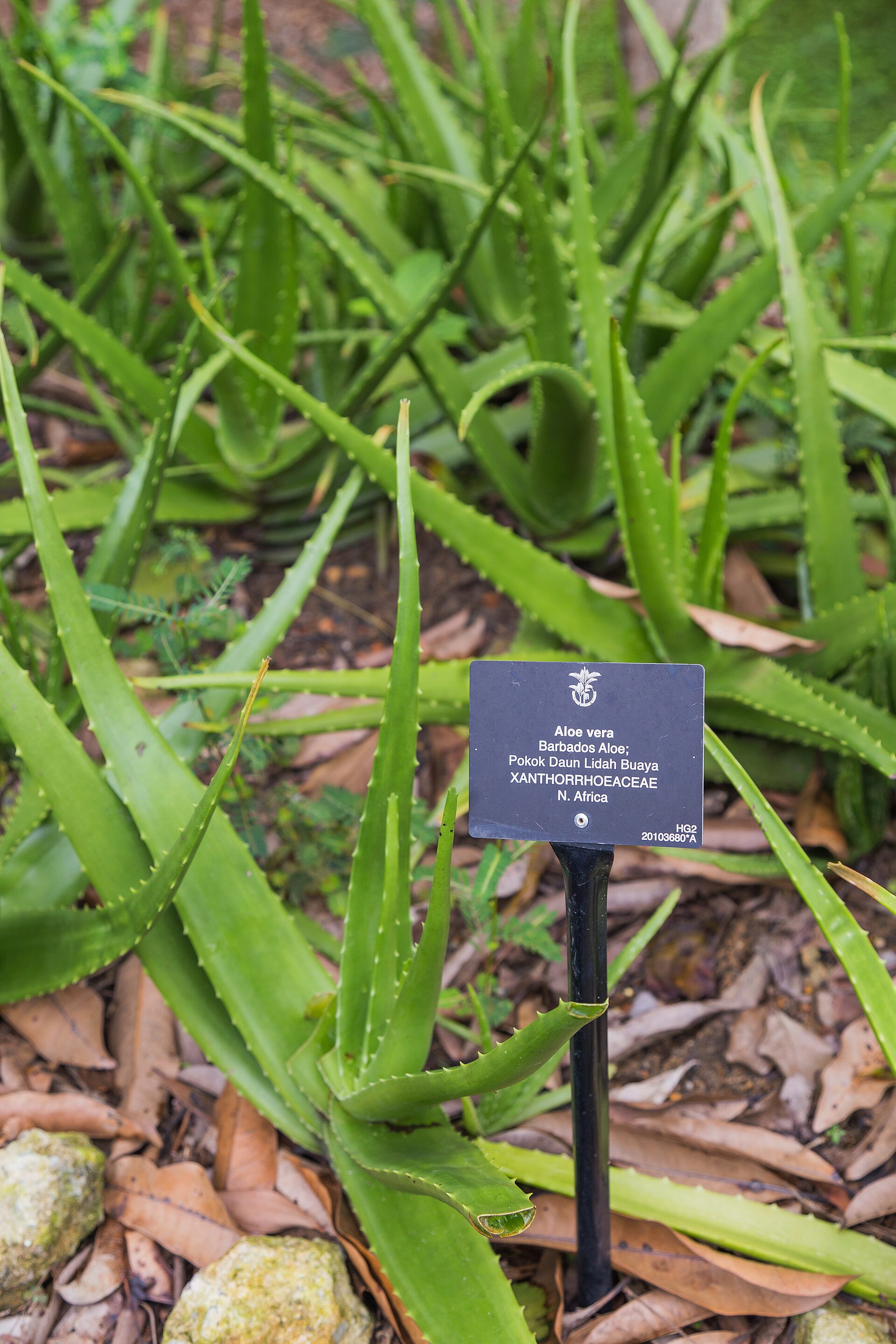
Aloe vera is an evergreen succulent native to the Arabian Peninsula [2]. In most of North America it is grown as a houseplant. It can live outdoors year-round only in the warmest areas (zone 10 and above) [2], and it is grown in southern border areas of Texas, New Mexico, Arizona, and California [3].
Aloe is used on the skin and by mouth, and the two are very different [3]:
Aloe gel comes from the clear inner part of the leaf. It is used on the skin and is generally well tolerated [3].
Aloe latex is the bitter yellow sap from just under the leaf skin. It is a strong laxative. Taken by mouth it can cause cramps and diarrhea, and the U.S. FDA no longer allows it in over-the-counter laxatives [3][4].
The evidence is modest even for the gel. It may help burns heal faster, but studies are small and use different products [3][5].
Common names: aloe, aloe vera, Barbados aloe, true aloe, medicinal aloe, medicine plant [1][2]
Botanical name:Aloe vera (previously known as Aloe barbadensis) [1][2]
Family: Asphodelaceae [2]. Some older sources place aloes in the lily family (Liliaceae) [1].
Watch the product names: "aloe" can mean very different things: the clear gel, the bitter yellow latex, or a whole-leaf extract that contains both [3]. They have very different safety profiles. See How it's used / prepared.
Where the name comes from: "aloe" comes from the Arabic alloeh, "bitter and shiny substance," and vera is Latin for "true" [2].
❦
Traditional uses
This section describes how people have used aloe historically. It does not show that these uses work. See the next section for the evidence.
Skin and wounds: aloe has been used for skin conditions and wounds for thousands of years. An Egyptian remedy book from about 1500 BC mentions it for infections and skin problems, and the Greek physician Dioscorides recorded its use to heal wounds in 74 AD [1]. Today it is promoted for burns, acne, psoriasis, and skin damage from radiation therapy [3].
Laxative: historically, aloe was used in medicines that were mainly laxatives [1]. Oral aloe is still promoted for constipation, diabetes, and weight loss [3].
Nipple care: aloe gel has been applied to cracked nipples during breastfeeding [6].
❦
What the evidence says
Bottom line: modest evidence that aloe gel on the skin may help burns heal. Weak or no good evidence for other uses. Drugs.com notes conflicting results across studies [1].
Use
What was found
Strength
Burns (gel on the skin)
A 2007 review of 4 studies (371 people) found burns healed about 9 days faster with aloe, but the products and outcomes varied too much to draw a firm conclusion [5]. NCCIH says aloe gel may speed burn healing and reduce burn pain [3].
Modest, for first- and second-degree burns.
Acne (gel on the skin)
2 small studies found improvement when aloe gel was used alongside other treatments [3].
NCCIH describes only a small amount of research [3].
Weak or unclear.
Nipple pain while breastfeeding
Results are mixed. One meta-analysis found benefit, but a review of only randomized trials found no difference from placebo [6].
Unclear.
Blood sugar (by mouth)
A small amount of research suggests oral aloe may lower blood sugar and HbA1c in people with diabetes [3].
Weak.
Constipation (latex by mouth)
Aloe latex is a strong laxative, but the FDA no longer accepts it in over-the-counter laxatives because of missing safety data [3][4].
Not recommended.
What we can't say: aloe is not a substitute for medical care for serious burns, wounds, or diabetes. In one report, using aloe gel as standard wound treatment actually slowed healing [1].
❦
How it’s used / prepared
This is general, traditional information, not a recommendation or a dose for you. Talk with a health professional before using aloe for a health purpose.
Parts used: the clear gel from the inner leaf. Other products use the latex from the outer leaf, or the whole crushed leaf [3].
Gel on the skin: NC State Extension notes the leaf can be broken open and the gel applied to the skin, and that this is safe for most people [2]. Drugs.com says the gel may be applied externally [1].
Latex (the yellow sap): this bitter sap seeps out when a leaf is cut [1]. It is a harsh laxative and is not recommended for use by mouth [1]. In 2002 the FDA required aloe latex to be removed from U.S. over-the-counter laxatives [3][4].
Oral gel drinks: studies suggest short-term use of oral aloe gel, up to 42 days, is safe [3]. A 2023 review found that drinkable products containing no more than 10 parts per million of aloin (a laxative compound) were not genotoxic in lab and animal tests [3].
Whole-leaf extracts: the International Agency for Research on Cancer classifies non-decolorized whole-leaf extract (which still contains the laxative compounds) as a possible human carcinogen [3].
If you breastfeed and use gel on the nipples: wash it off before nursing, because the taste may put the baby off or cause diarrhea [6].
❦
How to identify
Aloe vera is a houseplant or store product, not a wild plant in most of North America.
Plant: an evergreen succulent, 2–3 feet tall, that spreads by offsets (pups) [2].
Leaves: thick, fleshy, pointed leaves up to 18 inches long, growing in a rosette from the base, with small white teeth along the edges. They break easily and contain a gel-like sap [2].
Inside the leaf: under the thick skin is a layer of bundles that release a bitter yellow sap (the latex) when cut, and in the center is the colorless gel [1].
Flowers: tubular orange to yellowish flowers on a spike up to about 3 feet tall, only on plants at least 3 years old [2].
❦
Look-alikes to avoid
When in doubt, don't.
Don't swallow any part of an aloe plant, and only use gel from a plant you know is Aloe vera.
We did not find a source describing a dangerous look-alike for aloe vera. The real risks are confusing gel with latex, and confusing Aloe vera with other aloes.
Gel vs. latex
How to tell: gel is the clear, jelly-like center of the leaf. Latex is the bitter yellow sap that oozes from just under the skin when the leaf is cut [1].
Why it matters: the latex contains strong laxative compounds (anthraquinones) [6]. Gel contaminated with latex may explain some skin reactions [6].
Other aloe species
What they are: there are about 500 aloe species [1]. Drugs.com's aloe monograph also covers Cape aloe (Aloe ferox) and several other species [1].
Why it matters: allergic skin reactions have been reported with the related Aloe arborescens[1]. Check the botanical name on plants and products.
❦
Safety and interactions
Gel on the skin: generally well tolerated. Burning, itching, rash, and eczema have occasionally been reported [3]. Allergic skin reactions may be caused by latex contaminating the gel [6].
Latex by mouth: can cause stomach pain, cramps, and diarrhea [3]. Long-term use has caused bloody diarrhea, low potassium, kidney problems, muscle weakness, weight loss, and heart effects [1].
Liver: oral aloe leaf extracts, taken for as little as 3 weeks or as long as 5 years, have been linked to acute hepatitis [3]. In one case, an older woman developed hepatitis while taking aloe capsules for constipation, and her liver tests returned to normal after she stopped [9].
Cancer concern: non-decolorized whole-leaf extract caused gut cancers in rats and mice and is classified as a possible human carcinogen [3].
Medicines: overusing aloe latex may increase the risk of side effects from heart medicines called cardiac glycosides, such as digoxin [3]. Aloe may also add to the blood-sugar-lowering effect of diabetes medicines [1]. Ask your pharmacist before taking aloe by mouth.
Bowel conditions: taking aloe by mouth should be avoided by people with inflammatory bowel disease and by older adults with a possible bowel blockage [1]. In one case, swallowing large amounts of aloe caused a bowel blockage that needed surgery [1].
Pregnancy: oral aloe may be unsafe in pregnancy [3]. Drugs.com says not to use it, because it is a strong laxative, has a reputation for causing miscarriage, and has been linked to birth defects [1].
Breastfeeding: oral aloe may be unsafe while breastfeeding [3]. LactMed says aloe latex should not be used during breastfeeding [6].
Children: taking aloe by mouth is contraindicated for children under 12 [1].
Pets: the ASPCA lists aloe as toxic to dogs, cats, and horses. It can cause vomiting (not in horses), lethargy, and diarrhea. The ASPCA notes the gel is considered edible [7].
Not medical advice
This page is for general education only. It is not medical advice and doesn't replace a doctor, pharmacist, or other qualified professional. Herbs can cause allergic reactions and interact with medicines. Check with a health professional before using any herb, especially if you are pregnant or breastfeeding, giving it to a child, taking medication, or managing a health condition. Never eat or use a wild plant unless an expert has confirmed what it is. For a suspected poisoning in the U.S., call Poison Help at 1-800-222-1222 [8]. In Canada, call 1-844-POISON-X (1-844-764-7669), or the Centre antipoison du Québec at 1-800-463-5060 if you are in Québec [10].
Maenthaisong R, Chaiyakunapruk N, Niruntraporn S, Kongkaew C. The efficacy of aloe vera used for burn wound healing: a systematic review. Burns. 2007. https://pubmed.ncbi.nlm.nih.gov/17499928/